

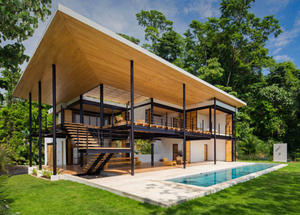
Most coastal homes are designed to look relaxed.
Very few actually make people relax.
Heat, glare, noise, poor airflow, and over-designed interiors quietly stress the body—especially in tropical and coastal climates.
This blueprint fixes that.
Not with luxury.
With biology, climate intelligence, and restraint.
Why coastal homes fail the nervous system
Common mistakes:
- Sealed boxes fighting heat with air-conditioning
- Huge glass facing west sun
- Low ceilings that trap heat
- Decorative “tropical” details without airflow
- Open plans with no acoustic control
The result:
A home that looks calm but feels exhausting.
The Bali and coastal vernacular solved this centuries ago—not with mysticism, but with environmental intelligence.

The core principle of the blueprint
Let the climate do the work.
If the building:
- Catches breeze
- Filters sun
- Releases heat
- Uses breathable materials
Then comfort becomes passive.
Machines become backup, not baseline.
Site orientation for coastal and tropical climates
Orientation is the highest-leverage decision you’ll make.
Blueprint rules
- Long axis east–west
- Morning sun welcomed
- West sun aggressively shaded
- Openings aligned to prevailing breeze
- Views framed, not exposed
Why it matters
You cannot fix bad orientation with finishes or technology.
Get this right and:
- Interior temperatures drop
- Energy use halves
- Nervous systems settle naturally
Pavilion-style layout instead of sealed boxes
Traditional Bali homes didn’t use one big air-conditioned volume.
They used zones with purpose.
Blueprint layout
- Living pavilion: open, social, breezy
- Sleeping pavilion: quiet, enclosed, cool
- Bathroom pavilion: semi-outdoor, grounding
- Courtyard: light, plants, airflow, rhythm
Why it works
- Clear transitions regulate the nervous system
- Noise stays where it belongs
- Sleep is protected
This is not inefficiency.
It is biological zoning.

Roof design that releases heat
Roofs do most of the thermal work in the tropics.
Blueprint rules
- High ceilings (3.0–3.5 m minimum)
- Ventilated roof cavity
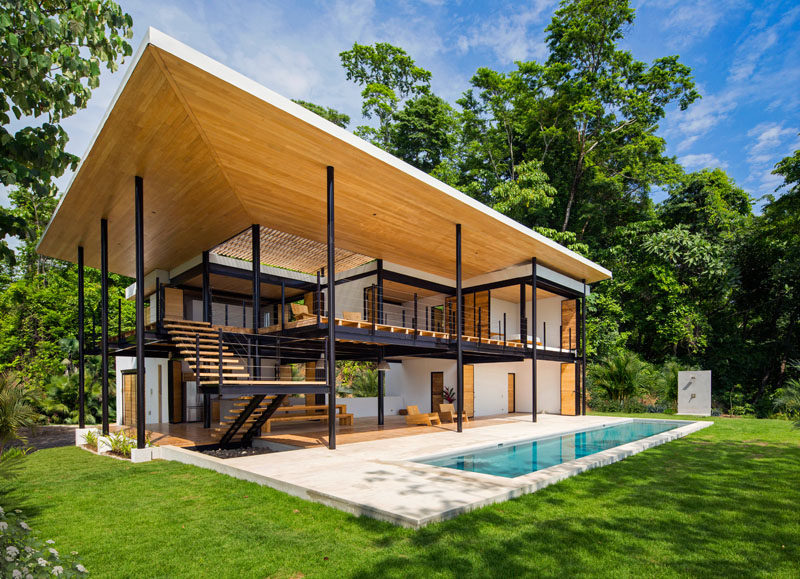
- Deep overhangs for sun and rain
- Lightweight roofing with insulation
What this replaces
- Low ceilings
- Trapped hot air
- Overdependence on AC
Heat should rise and leave—without effort.
Walls and openings that breathe
Walls should filter, not seal.
Blueprint rules
- Breathable wall systems
- Sliding or folding doors for cross-ventilation
- Louvers for airflow with privacy
- Insect screens integrated everywhere
Materials that work
- Lime plaster
- Local stone
- Timber or bamboo screens
- Breeze blocks in non-private zones
Fresh air reduces stress before you notice it.
Floors that cool and ground the body
Your feet regulate temperature and safety signals.
Blueprint rules
- Cool, matte surfaces
- No high-gloss finishes
- Durable in humidity
Proven options
- Polished concrete
- Terrazzo
- Local stone
Cool floors lower perceived temperature and calm the body.
Light design aligned with circadian rhythm
Tropical light is powerful. It must be shaped, not maximised.
Blueprint rules
- Daylight first, artificial light second
- Warm light only after sunset
- No harsh downlights in bedrooms
- Lanterns and indirect lighting at night
The goal is time awareness, not brightness.
Bedroom design for deep sleep
Sleep is the foundation of every retreat-quality home.
Blueprint rules
- East-facing where possible
- Minimal furniture
- Natural fabrics only
- Ceiling fan before AC
- No screens
A cool, quiet bedroom is better than any wellness feature.
Bathrooms as regulation spaces
Water resets the nervous system.
Blueprint rules
- Semi-outdoor where privacy allows
- Stone or concrete finishes
- Natural drainage
- Plants instead of sealed walls
Bathing becomes recovery, not routine.
Garden and courtyard as the nervous system buffer
Plants are not decoration.
They are regulation tools.
Blueprint elements
- Central courtyard or green spine
- Shade trees for heat control
- Water feature for white noise
- Soft planting near walls and windows
Nature absorbs what architecture cannot.
Tech and energy: less, not more
The goal is resilience, not automation.
Blueprint rules
- Fans before air-conditioning
- Minimal devices
- Wi-Fi away from bedrooms
- Solar-ready, not tech-heavy
Low stimulation = better recovery.
Budget priorities that actually matter
If budget is limited, spend here first:
- Orientation
- Roof height and ventilation
- Openings and airflow
- Bedroom quality
Cut here first:
- Built-in furniture
- Decorative stone
- Automation
- “Instagram features”
Biology beats aesthetics every time.
The performance test
At 3 pm.
Windows open.
Fan on low.
If the home feels:
- Cool
- Quiet
- Spacious
The blueprint worked.
If not, adjust airflow, shade, or ceiling height—not décor.
The deeper insight
Bali and coastal homes were never about luxury.
They were about living in cooperation with climate and body.
When architecture stops fighting nature, people stop fighting themselves.
References & Evidence Base
This blueprint aligns directly with the biological and environmental principles outlined in:
Callaghan, R.
SelfCare: Lifestyle Medicine for the People
SelfCare Global
Full scientific reference list:
👉 https://www.selfcare.global/full-reference-list-from-the-selfcare-book-by-rory-callaghan/
Key domains:
- Circadian biology
- Nervous system regulation
- Environmental psychology
- Biophilic and vernacular design