

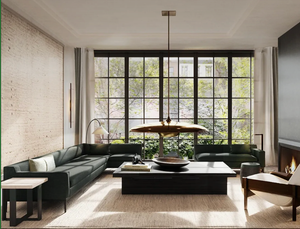
You don’t need ancient technology to live in a resonant home.
You need alignment.
Most people sense something is wrong with modern houses but struggle to name it. The fatigue. The restlessness. The poor sleep that doesn’t match how “good” life looks on paper.
This isn’t mindset.
It’s environment.
Your home is constantly training your nervous system. The question is whether it’s teaching safety or threat.
This checklist translates what old buildings did intuitively into clear, practical design principles you can apply today.
No mythology.
No gadgets.
Just biology.

What “resonance” actually means in a home
Resonance is not mystical frequency.
It is coherence between environment and human biology.
A resonant home:
- Reduces unnecessary sensory input
- Supports circadian rhythm
- Lowers background stress
- Allows the body to downshift without effort
When the environment is right, regulation happens automatically.
Fill your own cup first.
Serve from overflow.
Light that supports circadian rhythm at home
Light is information.
Your hormones respond to it instantly.
Check
- Bright lights used late at night
- Bedrooms without morning daylight
- One lighting level all day
Do this
- Morning light in bedrooms
- Midday light in living spaces
- Warm, low light after sunset
- Full darkness during sleep
Result
Better sleep.
Steadier energy.
Improved mood.
Protect darkness like medicine. It is foundational.
Sound that signals safety instead of threat
Silence is not emptiness.
It is regulation.
Your nervous system scans sound constantly, even when you think you’ve tuned it out.
Check
- Echo when speaking
- Constant hums or background noise
- Poor sleep due to sound
Do this
- Rugs, curtains, fabric, timber
- Soft surfaces that absorb sound
- Quiet zones for rest
- Remove unnecessary mechanical noise
Result
Calmer conversations.
Lower baseline stress.
Less irritability.
If a room echoes, the body stays alert.

Air quality that supports brain and mood
Fresh air is cognitive fuel.
Stale indoor air increases agitation long before you consciously notice it.
Check
- Windows rarely opened
- Air feels heavy by afternoon
- Synthetic or chemical smells
Do this
- Open windows daily
- Create cross-ventilation where possible
- Use fans before air-conditioning
- Remove scented products
Result
Clearer thinking.
Easier breathing.
Less background anxiety.
Airflow is nervous-system support.
Materials that ground the nervous system
Your body senses materials through touch and vibration.
Synthetic-heavy environments create subtle sensory fatigue.
Check
- Plastic-heavy furniture
- Glossy, reflective surfaces everywhere
- Synthetic fabrics where skin rests
Do this
- Wood, stone, clay, lime
- Natural fibres for bedding and seating
- Minimise plastic and high-gloss finishes
Result
Grounded presence.
Less sensory overload.
More comfort without stimulation.
The body trusts what feels alive.
Layout that restores daily rhythm
Humans need transitions.
Modern homes remove them.
When everything blends together, stress rises.
Check
- Bedroom doubles as office
- No clear entry space
- Visual clutter everywhere
Do this
- Clear zones for sleep, work, rest
- Entry space that slows arrival
- Storage that reduces visual noise
Result
Days feel structured without pressure.
Evenings unwind naturally.
Mornings start cleaner.
Good layout replaces willpower.
Technology hygiene that protects rest
This is not anti-technology.
It is pro-recovery.
Screens and signals delay nervous-system downshift.
Check
- Screens in bedrooms
- Blinking lights at night
- Wi-Fi next to sleep areas
Do this
- No screens in bedrooms
- Wi-Fi away from sleep zones
- Minimise night-time indicator lights
Result
Deeper rest.
Quieter mind.
Better emotional regulation.
Rest needs silence. Digital silence counts.
The core insight of a resonant home
You don’t need to fix yourself.
You need to stop living in an environment that keeps you activated.
When light, sound, air, materials, layout, and technology align with biology, wellbeing becomes the default.
That is resonance.
One five-minute action to start today
Tonight:
- Turn off all overhead lights after sunset
- Use one warm lamp
- Open a window
Sit quietly for one minute.
If your shoulders drop and breath slows, your home just did its job.
Why this matters beyond your walls
Homes shape families.
Families shape communities.
Communities shape the future.
Fill your own cup first.
Serve from overflow.
SelfCare is not selfish.
It creates a ripple effect of calmer homes, healthier people, and more resilient societies.
Together, we rise as one.
References & Evidence Base
This article is grounded in the evidence base synthesised in:
Callaghan, R.
SelfCare: Lifestyle Medicine for the People
SelfCare Global
The full, transparent reference list is available here:
👉 https://www.selfcare.global/full-reference-list-from-the-selfcare-book-by-rory-callaghan/