

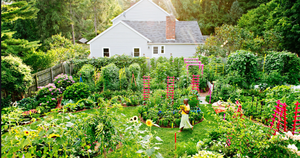
Designed by the top 0.01% of eco-luxe, regenerative architects
A home that gives more back than it takes — and still feels calm, beautiful, and attainable.
This is not a billionaire eco-compound.
This is the ideal everyday home: buildable, self-sustaining, emotionally regulating, and future-proof.
The goal is simple:
A home that quietly supports life — yours, the land’s, and the ecosystem’s — without demanding constant effort.
Design Philosophy: Regeneration Before Technology
Sustainability tries to reduce harm.
Regenerative design actively creates benefit.
This home is designed to:
- Restore soil and water cycles
- Produce energy and food
- Regulate the nervous system
- Adapt to climate extremes
- Age gracefully over decades
Technology supports the system — it never leads it.
1. Site & Orientation — Let the Land Do the Work
Rule #1: Never fight the site.
Optimal site strategy
- Long axis oriented east–west
- Home placed on contour, not flattened land
- Living spaces open to winter sun, shaded from summer heat
- Wind corridors preserved, not blocked
Regenerative impact
- Reduced energy demand before systems are added
- Natural cooling and heating
- Microclimates form around the home
A well-oriented home can cut energy needs by 40–60% before solar is installed.
2. Home Form — Simple Geometry, High Performance
Complex shapes waste energy and money.
Optimal form
- Single or split-level pavilion layout
- Compact footprint (90–150 sqm ideal for most families)
- Courtyards instead of extra rooms
- Roof designed as climate device, not decoration
Why this matters
- Less material
- Lower build cost
- Easier thermal control
- Long-term adaptability
Beauty comes from proportion and restraint, not excess.

3. Materials — Healthy for Humans and the Planet
This home is built from materials that breathe, age, and repair.
Core material palette
- Timber (local, FSC or reclaimed)
- Lime plaster (walls that regulate humidity)
- Rammed earth or compressed earth block (where climate allows)
- Stone or terrazzo floors (thermal mass + durability)
- Natural fibres only (linen, wool, cotton)
What we avoid
- Toxic sealants
- Excess plastic
- High-gloss synthetics
- Materials that cannot be repaired
If it touches skin, it must feel alive.
4. Energy — Solar First, Grid Optional
This is a solar-native home, not a grid-dependent one.
Energy system
- Roof-mounted solar sized for annual needs
- Battery storage for 1–2 days autonomy
- Passive design reduces total load dramatically
- Optional grid-tie for resilience (not dependence)
Design priority
- Fans before AC
- Insulation before technology
- Shading before cooling
- Daylight before lighting
The cheapest energy is the energy you never need.
5. Water — Closed-Loop, Life-Supporting
Water is treated as a resource, not waste.
Systems included
- Rainwater harvesting (roof → tanks → home)
- Greywater reuse (showers, sinks → gardens)
- Composting or low-water toilets where regulations allow
- Swales and infiltration trenches on site
Regenerative outcome
- Gardens irrigated without mains water
- Groundwater replenished
- Zero runoff leaving the site
The home becomes part of the watershed, not a burden on it.

6. Permaculture Garden — Food, Shade, Medicine
The garden is not decorative.
It is infrastructure.
Permaculture zones
- Zone 1: kitchen herbs, greens, daily harvest
- Zone 2: fruit trees, shrubs, perennial vegetables
- Zone 3: staple crops or shared community planting
- Zone 4: native regeneration and habitat
Integrated benefits
- Food security
- Passive cooling through shade
- Biodiversity support
- Mental health regulation
Even a small plot can produce 30–60% of fresh food needs.
7. Interior Layout — Nervous-System-First
This is where eco-luxe becomes human-centric.
Interior principles
- Bedrooms quiet, dark, and minimal
- Living areas open, breathable, and social
- Clear transitions between zones
- No visual clutter, no sensory overload
Design outcomes
- Better sleep
- Lower stress
- Easier focus
- Stronger relationships
The home regulates you without asking.
8. Technology — Invisible, Minimal, Intentional
Smart homes often overstimulate.
This home is calm by default.
Tech rules
- No screens in bedrooms
- Wi-Fi positioned away from sleep zones
- Manual overrides everywhere
- Technology serves resilience, not novelty
A home should not feel like a control panel.
9. Cost Reality — This Is Achievable
This is not a luxury fantasy.
Typical cost range (region dependent)
- Build: comparable to standard new builds
- Operating costs: dramatically lower
- Maintenance: simpler, cheaper, longer lifespan
Over 20–30 years, this home:
- Costs less to run
- Ages better
- Retains value
- Adapts to climate change
True luxury is low dependency.
The Ultimate Test
At 3pm on a hot day:
- Windows open
- Fan on low
- No air conditioning
If the home feels cool, quiet, and calm, the design succeeded.
If it needs constant systems to survive, it failed.

Final Principle
The best home is not the one that looks sustainable.
It is the one that quietly supports life — human and ecological — every single day.
This is eco-luxe not as status,
but as intelligence, restraint, and care.