

How a generation can build homes that heal people and land
This is not about downsizing for aesthetics.
It’s about resizing life to fit biology, ecology, and reality.
Housing is broken.
Young people feel it first.
Prices are detached from value.
Homes consume more than they give.
Buildings stress the nervous system.
Cities drain energy instead of restoring it.
So a quiet revolution is forming.
Not louder.
Smarter.
WHY THE NEXT GENERATION IS WALKING AWAY FROM BIG HOUSES
This generation is not rejecting comfort.
They are rejecting waste.
They’ve seen:
- Burnout normalized
- Debt framed as success
- Buildings sealed, loud, synthetic, and sick
- Nature treated as decoration
They want homes that:
- Support sleep
- Support focus
- Support relationships
- Support the planet
Not someday.
Now.

THE FUTURISTIC TINY HOME IS NOT SMALL
IT IS PRECISE
The future tiny home is 90–120 sqm.
Not cramped.
Not performative.
Every square meter earns its place.
Design priorities shift from:
- Status → regulation
- Size → proportion
- Technology → biology
The home becomes an operating system, not a storage unit.
HEALTH-FIRST DESIGN (THE REAL INNOVATION)
The biggest upgrade is invisible.
Light
- Morning sun wakes the body naturally
- Warm light at night protects sleep
- Darkness is respected
Sound
- Soft materials absorb noise
- No echo. No hum.
- Silence becomes safe again
Air
- Cross-ventilation before air-conditioning
- Open windows daily
- Plants and airflow reduce cognitive fatigue
Materials
- Wood, stone, clay, lime
- Natural fibres where skin touches space
- Less plastic. Less gloss. Less stress
The result:
Better sleep.
Clearer thinking.
Lower baseline anxiety.
This is not luxury.
This is physiology.
ECO-FRIENDLY IS NO LONGER ENOUGH
REGENERATIVE IS THE GOAL
Sustainability means “do less harm.”
Regeneration means leave things better.
The new tiny home:
- Captures rainwater
- Reuses greywater for gardens
- Generates solar energy
- Builds soil through permaculture
- Supports biodiversity
The house is no longer a drain.
It becomes a node in a living system.
OFF-GRID WITHOUT GOING BACKWARDS
This is not anti-technology.
It is right-sized technology.
- Solar + battery instead of central dependency
- Fans before air-conditioning
- Manual overrides instead of over-automation
- Fewer devices, better placement
Resilience replaces convenience addiction.
When systems fail, life continues.
LAND OWNERSHIP REIMAGINED
The future is not isolated plots.
It’s shared land, private homes.
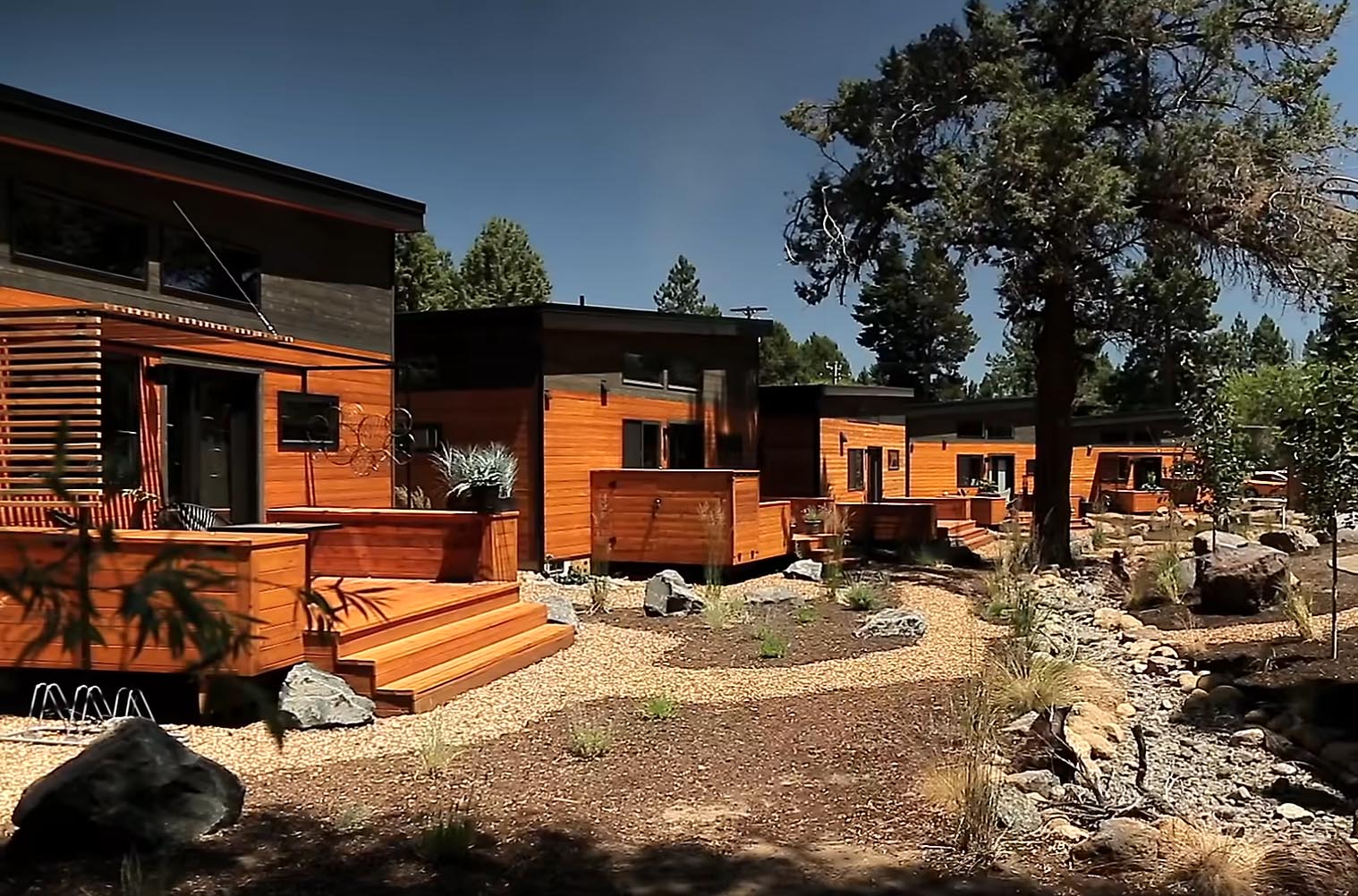
Clusters of tiny homes:
- Share gardens
- Share water systems
- Share paths, not roads
- Preserve wild space
This lowers cost.
It increases safety.
It restores community without forcing it.
Old villages knew this.
We forgot.
LOW FOOTPRINT, LONG LIFE
The goal is not temporary living.
These homes are designed to last:
- Simple structures
- Repairable materials
- Climate-adapted forms
- Local labour and skills
A well-built small home ages better than a large fragile one.
Longevity is the new sustainability.
THE PSYCHOLOGICAL SHIFT
The biggest change is internal.
When a home:
- Is quiet
- Is breathable
- Is grounded
- Is proportioned for humans
People slow down.
Consumption drops.
Relationships deepen.
Health stabilises.
Life feels manageable again.
This is the ripple effect.
THIS IS NOT A NICHE
IT IS A CORRECTION
The futuristic tiny home movement is not fringe.
It is:
- Economic realism
- Health intelligence
- Ecological responsibility
- Cultural maturity
It is a generation saying:
“We don’t need more.
We need better.”

START WHERE YOU ARE
You don’t need perfection.
Start with:
- Light that follows the sun
- Fewer synthetic materials
- Less noise
- More plants
- Less square footage, more intention
Fill your own cup first.
Then serve from overflow.
Because SelfCare is not selfish.
Homes that support human wellbeing create a ripple effect—healthier people, healthier communities, healthier futures.
This is how we build for the Rising Billions.