

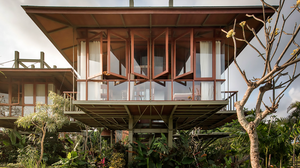
A repeatable model for Bali — and anywhere in the world
This is not a single house.
It’s a housing operating system.
Designed for 200 small, high-performance homes, this model works in Bali, the tropics, temperate zones, and peri-urban edges globally. It prioritises human regulation, ecological regeneration, and financial viability — without luxury excess or technological fragility.
THE CORE IDEA
Build fewer types of homes. Build them better. Repeat with precision.
Instead of 200 bespoke houses:
- 1 core home type
- 3 minor variants
- Shared infrastructure
- Local materials
- Local labour
- Global logic
This is how affordability, beauty, and resilience coexist.
THE BASE UNIT (THE CELL)
Every system starts with a standard home cell.
Base Home
- 90–120 sqm internal
- 2 bedrooms
- 1 bathroom (semi-outdoor adaptable)
- Open living pavilion
- Covered outdoor space
- Garden spine
This cell:
- Works off-grid or grid-light
- Adapts to climate
- Regulates the nervous system by default
Everything else scales from here.
THE CLUSTER LOGIC (HOW 200 HOMES WORK TOGETHER)
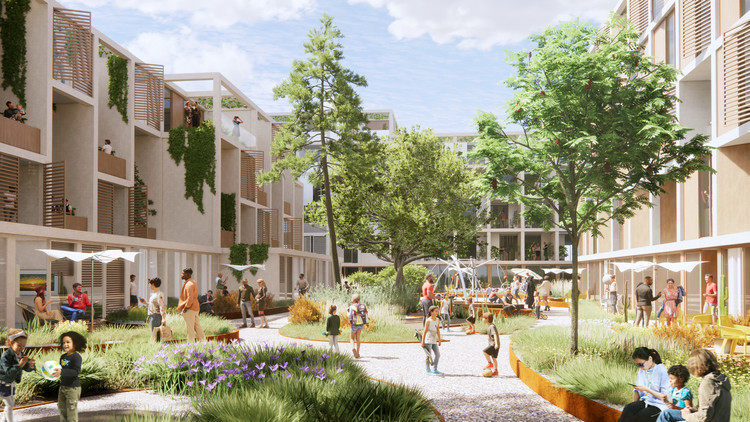
Homes are grouped into clusters of 8–12.
Each cluster shares:
- A food garden
- Water systems
- Shaded paths
- Quiet social space
No roads between houses.
No cars dominating the centre.
Movement is:
- Walkable
- Slow
- Calm
This mirrors historic villages — not modern suburbs.
THE SITE STRUCTURE (MACRO SCALE)
For 200 homes, the land is organised into four layers:
1. Home Clusters (Private + Semi-Private)
- 8–12 homes per cluster
- Shared green heart
- Visual privacy without isolation
2. Community Spine
- Gardens
- Play areas
- Gathering pavilions
- Clinics / work hubs
3. Productive Landscape
- Food forests
- Market gardens
- Water retention
- Compost systems
4. Wild Buffer
- Reforestation
- Biodiversity corridors
- Flood and heat protection
This is not “eco styling”.
It is ecological function.
BALI-SPECIFIC ADAPTATION
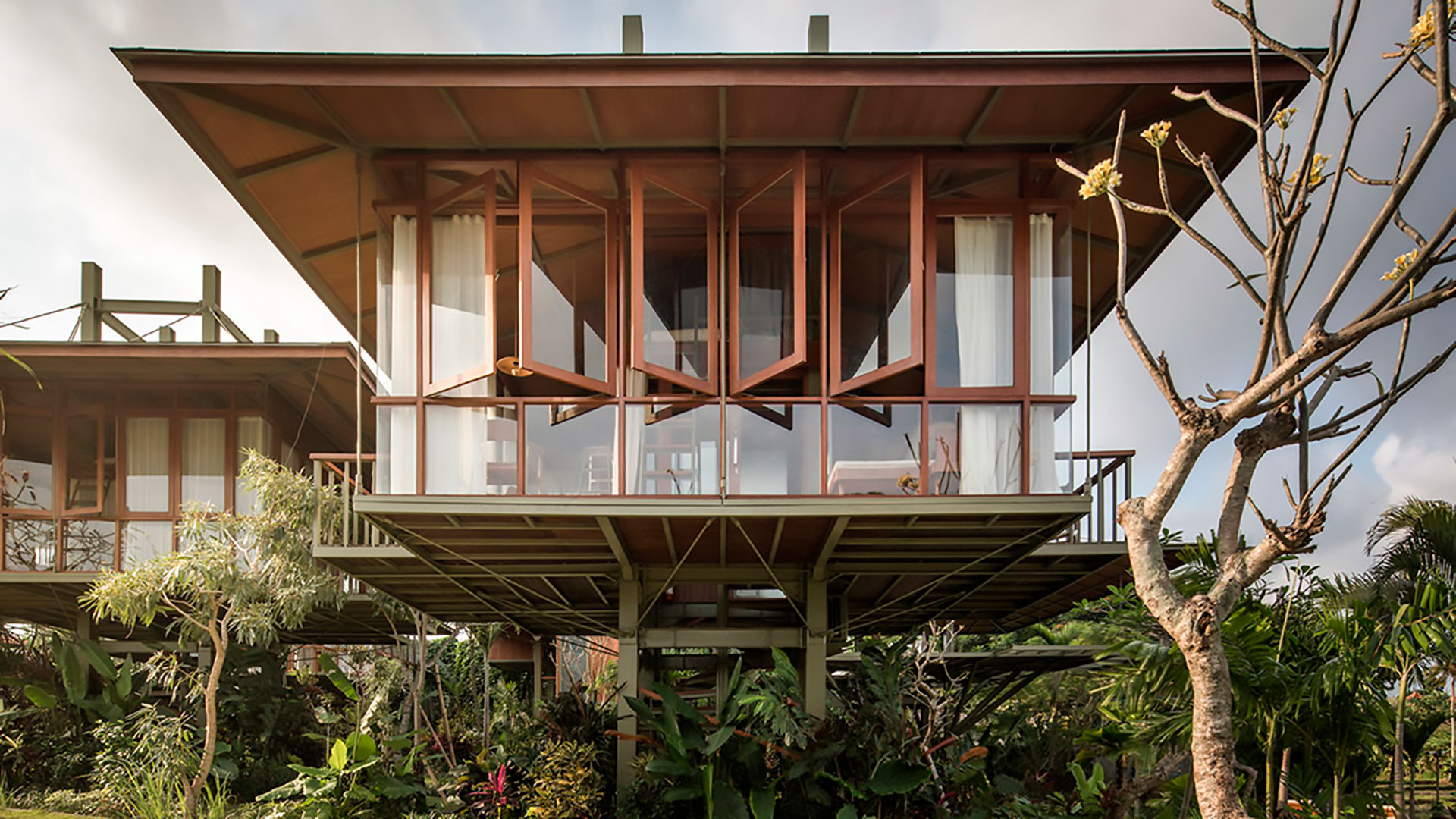
Climate logic
- East–west orientation
- Deep overhangs
- High ceilings
- Cross ventilation
Materials
- Concrete frame
- Lime plaster
- Timber screens
- Stone or terrazzo floors
Water
- Rain capture
- Greywater to gardens
- Minimal blackwater load
Result
Homes stay cool, quiet, and low-energy without AC dependency.
GLOBAL ADAPTABILITY (WHY THIS SYSTEM TRAVELS)
The system adapts through layers, not redesign.
What changes:
- Insulation thickness
- Roof pitch
- Wall assembly
- Window size
- Garden species
What stays constant:
- Proportions
- Light logic
- Flow
- Material honesty
- Human-first layout
This is why it works in:
- Bali
- Portugal
- Mexico
- Australia
- Southern Europe
- Parts of Africa and Asia
ENERGY + WATER AT SCALE
Energy
- Distributed solar (no single point failure)
- Microgrids per cluster
- Battery backup shared
Water
- Roof capture on every home
- Shared storage
- Gravity-fed irrigation
Waste
- Compost loops
- Greywater reuse
- Minimal sewage load
Infrastructure becomes lighter as scale increases.
ECONOMICS (WHY DEVELOPERS SHOULD CARE)
Build efficiency
- Repetition lowers cost
- Fewer errors
- Faster approvals
Operating cost
- Lower energy demand
- Lower maintenance
- Lower long-term liability
Market advantage
- Homes people feel better in
- Strong word-of-mouth
- Lower vacancy
- Higher retention
This is anti-speculation housing — built to last.
SOCIAL DESIGN (THE INVISIBLE INFRASTRUCTURE)
This system quietly supports:
- Privacy without isolation
- Community without pressure
- Families, singles, elders
- Work-from-home living
There are no forced interactions.
No artificial “community programming”.
The environment does the work.
WHY 200 IS THE SWEET SPOT
- Large enough for shared infrastructure
- Small enough for human scale
- Financially viable
- Governable without bureaucracy
Above 200, systems harden.
Below 100, costs rise.
WHAT THIS SYSTEM REPLACES
- Cookie-cutter estates
- Gated “eco” enclaves
- High-maintenance luxury developments
- Isolated tiny-house fantasies
This is grown-up regenerative housing.
THE FINAL TEST
Walk through the site at dusk.
If you see:
- People outside
- Quiet conversation
- Children moving freely
- Lights warm and low
- No mechanical noise
The system is working.
WHERE THIS GOES NEXT
This housing OS can become:
- A licensed global model
- A Bali pilot community
- Workforce housing
- Retreat-residential hybrids
- Government-backed affordable housing
Built once. Repeated well.
Adapted locally. Owned by communities.
One line to remember
When homes regulate humans and land together, scale stops being the enemy.