

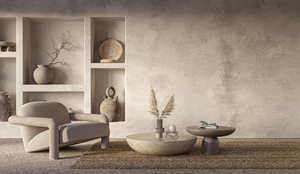
Your body knows materials before your mind does.
Before thought.
Before mood.
Before meaning.
Every surface sends a signal.
Safe or synthetic.
Grounded or sharp.
Alive or dead.
Most homes ignore this.
The nervous system does not.
Why materials regulate the nervous system
Touch is not optional.
Your feet, skin, and joints read vibration, temperature, and texture constantly.
Plastic feels light and brittle.
Glossy finishes reflect too much.
Sealed surfaces feel inert.
The body responds with micro-tension.
Natural materials do the opposite.
They absorb vibration.
They hold temperature gently.
They age instead of breaking.
This lowers sensory load without effort.
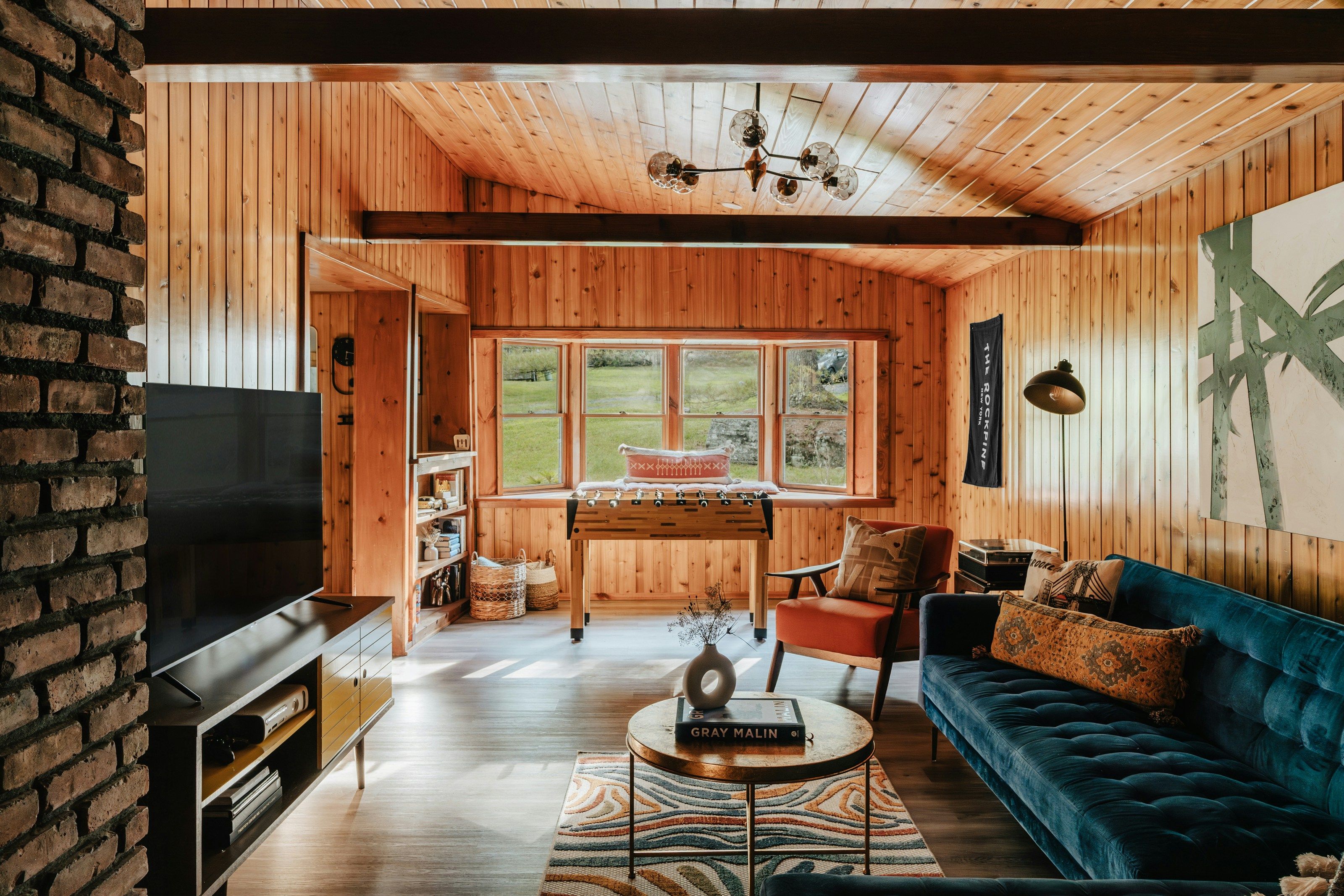
What Feng Shui really meant by “elements”
The original idea was material balance, not symbolism.
Wood grounds and warms.
Stone stabilises and slows.
Earth adds weight and safety.
Metal brings restraint when used sparingly.
Too much of one creates imbalance.
This is not belief.
It is how the body responds to surfaces over time.
What Japanese wabi-sabi gets right
Perfection creates pressure.
Wabi-sabi allows:
- Irregular grain
- Soft wear
- Visible age
Nothing has to perform.
Natural imperfection tells the nervous system it can rest.
Homes that allow wear feel more humane.
Homes that demand perfection feel brittle.
What old construction understood instinctively
Older buildings used mass and breathability.
Stone walls.
Timber beams.
Lime plaster.
These materials:
- Absorb sound
- Regulate humidity
- Reduce chemical load
They create calm by default.
Modern sealed boxes removed this buffer.
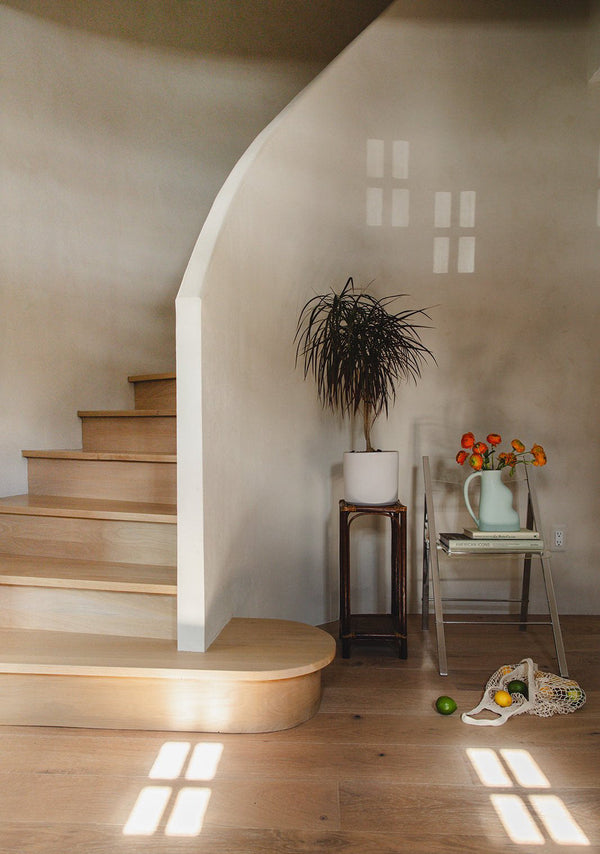
What modern research confirms
High sensory load increases fatigue.
Synthetic materials increase glare and reflection.
Hard surfaces amplify sound.
Chemical off-gassing irritates the system.
Natural materials reduce background stressors.
This is not aesthetic preference.
It is physiology.
How to apply the Material OS at home
Do this.
- Wood, stone, clay, lime plaster
- Natural fibres where skin touches space
- Matte, breathable finishes
Start where the body rests:
- Bed
- Sofa
- Floor
You do not need to change everything.

What to remove first
Avoid this.
- Excess plastic
- High-gloss synthetic surfaces
- Sealed, dead-feeling walls
If a surface feels cold, shiny, and loud, it adds load.
Budget-friendly substitutions
If solid materials are not possible:
- Linen or cotton covers
- Wool rugs
- Wood trays or tables
- Clay or ceramic lamps
Small contact points matter more than full renovations.
The result you should expect
Grounded presence.
Less sensory fatigue.
Easier stillness.
You feel more in your body without trying.
The simple test
Sit down.
Place your hands on the surface you touch most.
If your shoulders soften, it works.
If you tense or fidget, change the material.
Fix the surface.
Not your behaviour.
The deeper truth
Modern life pulls us upward and outward.
Natural materials pull us back into the body.
Fill your own cup first.
Serve from overflow.
SelfCare is not selfish.
It is how grounded homes create a ripple effect of calmer nervous systems, steadier relationships, and healthier futures.
Next, I can write Form OS: Curves, Proportion, and Safety or Tech Hygiene OS: Signal Load Management.